

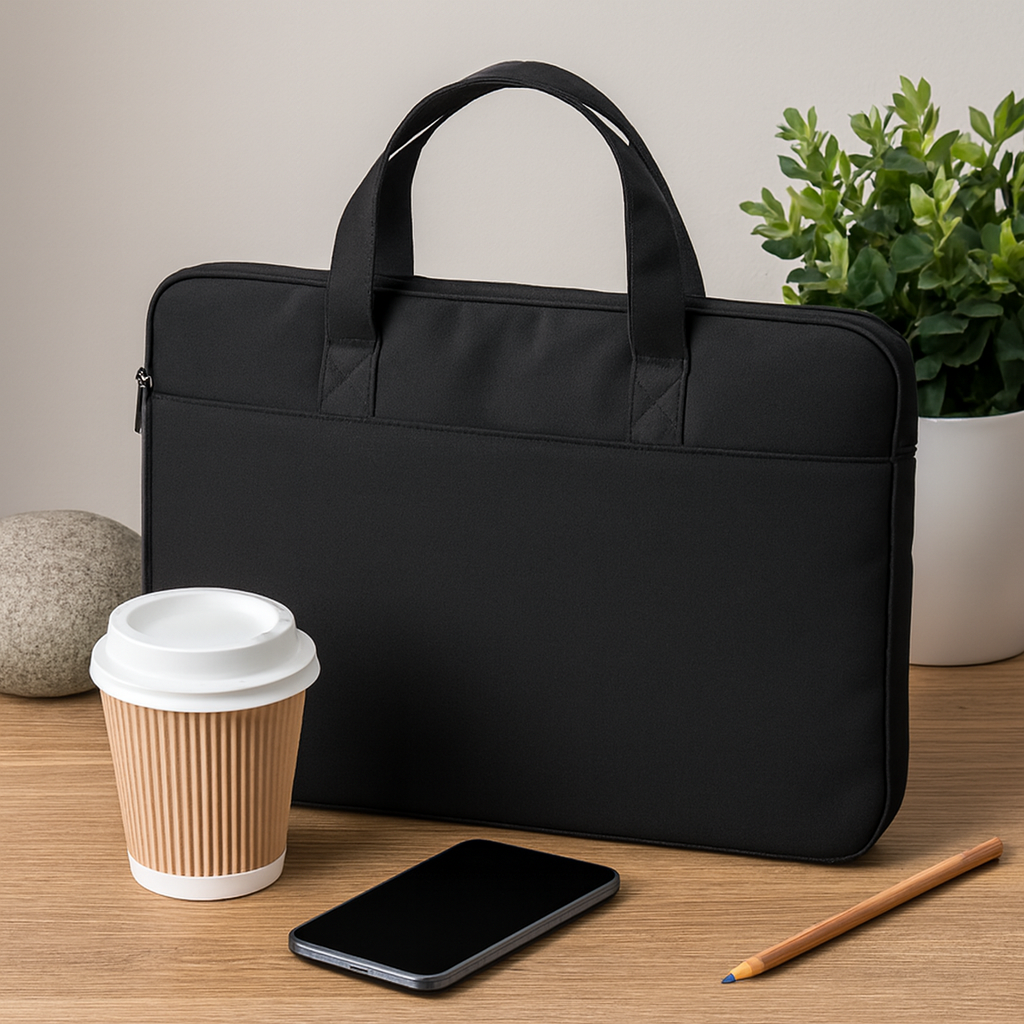
When you host an event, you want your guests to walk away with more than just a “goodie bag”. You want them to hold onto merch that, when they see or pull it out weeks later, takes them right back to the conversations, the energy, and the moments that filled the room.
And if we’re to be honest for a second, you want it to leave no doubt about who made such an experience possible – you.
But where things usually get tricky is when you’re faced with the question, which one is the perfect event gift?
Not only do you have plenty of options, but you’re also working within real constraints, with budget being a big part of it. Heck, even the idea of a “perfect” gift means something different from one person to the next.
Ahead, you’ll learn a simple framework we’ve used with successful corporate teams across Dubai and the UAE to plan event merch with confidence. It’s the same approach you can follow to make clear decisions before you spend a single dirham.
Why Your Event Merch Needs a Strategy (Not Just a Swag List)
Think about how a lot of event merch actually ends up. Totes get stuffed into hotel drawers. Pens vanish somewhere between the airport gate and baggage claim. T-shirts quietly get demoted to sleepwear (if they get worn at all).
We bet the last thing you want is for your brand to be lumped into that same pile of forgettable swag.
That’s exactly why treating event merch as a strategic decision matters. A clear strategy changes the experience in a few very real ways:
- It removes guesswork and last-minute stress. Instead of rushing to order generic items a week before the event, you know what you’re giving, who it’s for, and why it makes sense. As such, it saves you time, energy, and a lot of unnecessary panic.
- It shapes how attendees see you. When people genuinely like the merch they receive, they feel respected and thought of. And that fosters good relationships, better conversations, warmer follow-ups, and stronger goodwill after the event.
- It helps you get more value from your spend. Event merch costs money, and it’s rarely cheap. If you’re going to spend the budget anyway, it makes sense to choose items that continue doing work for your brand instead of being forgotten by the next morning.
With that in mind, a solid event merch strategy looks closely at five key areas: the nature of the event, your audience, your branding and messaging, your budget, and your timelines and logistics.
Start with Event Goals & Audience
What kind of event is it?
A client appreciation dinner won’t need the same kind of gifts as a product launch, trade show, or even an internal team milestone.
Think about it. If you received a loud, logo-heavy hoodie at a formal networking dinner, it would feel slightly odd, maybe even out of place. There’s a lingering sense of mismatch that makes the gesture feel off, even if the gift itself was expensive or well-made.
That’s to say not all events are built the same, and neither should your merch.
Start by identifying what type of experience you’re creating. Is it formal or casual? Internal or public-facing? One-time or part of a series? The clearer the event type, the clearer the merch’s purpose.
Who are you gifting?
Now zoom in on the people attending the event. Are these VIP clients? Potential partners? Internal teams? Media? Government reps?
Each group has its own expectations and preferences. What works for a C-level exec likely won’t make sense for an event coordinator.
This area is where many teams too often make the mistake of going too broad or trying to please everyone with one generic gift.
When you define your audiences upfront, you can decide whether you need separate tiers or one clear set of items that work across the board.
Map goals → role of the gift
If the gift had a job, what would it be hired to do at this event?
Are you trying to break the ice? Say thanks? Initiate a conversation? Reinforce a campaign message? Build long-term recall?
Your event merchandise should support the short-term and long-term outcomes you want to achieve. Once you’re clear on that, chances are, you’ll find it a lot easier to weed out bad ideas, leaving you with a smaller but more relevant set of options.
Align Gifts with Your Brand & Message
Brand values & positioning
Sure, event merch is usually perceived as a gift, a freebie. But beyond that, it’s also a statement that captures what your brand stands for.
If your brand is about innovation, the gift should feel modern, edgy, and thoughtful.
If sustainability is part of your identity, it makes sense to give eco-friendly sets rather than plastic-heavy bundles. If you’re positioned as premium or luxury, then the materials and packaging should feel that way too.
The bottom line is, your gift should 100% look and feel like it came from you, not just from a catalogue.
Visual consistency
Your merch should feel like a natural extension of everything else you’ve set up, from your booth design to your event banners to the slides on your presentation deck.
Brand colours, logo placements, typography, packaging style, even the material feel of the items themselves – everything should align.
Why does this matter? Because every mismatch dilutes the impression you’re trying to build.
Think about it. If your setup is sleek and minimalist in black and white, but your giveaway turns out to be a bright red item covered in four different font styles, expect a few raised eyebrows and some head-scratching.
Sure, it’s one heck of a way to grab attention and get people talking, but just not in a good way.
When visual consistency is done right, people associate the gift with your brand instantly. And more importantly, they remember you for the right reasons.
Messaging & copy
Messaging and copy can frame an entire experience, which is why they need the same level of care as design.
If your company positions itself as inclusive or values neutrality, your gift has no business carrying political statements or religious references.
Left unchecked, a few lines of text can ruin what would have otherwise been a great and well-executed event.
So how do you get this right?
Start with a simple principle: if the merch has enough space, use it intentionally. If it doesn’t, don’t force it.
Sometimes, no copy at all works better than squeezing in a line just for the sake of it, or worse, one that puts people off.
But when you do have space, a short, thoughtful line in your brand’s actual voice, aligned with what you stand for, lands far better than a generic quote that could have come from any company.
Set Budget, Quantities & Tiers (Standard, VIP, Staff)
Setting your budget upfront helps narrow down your options from the very start. It also saves you from that awkward scramble where you’ve picked the perfect gift, only to realise you can’t afford it for your full headcount.
And speaking of headcount, keep in mind that attendees are on the same level, which is to say,
A VIP speaker, a high-ticket client, or a major sponsor, for example, likely deserves something different from a general attendee or internal staff member.
That’s where tiers come in. By planning standard, VIP, and staff tiers early, you can match the value of the gift to the relationship, all without stretching your budget or watering down the experience.
All that said, this is what we recommend you do in this part of the framework:
- Segment headcounts in tiers.
Group your audiences by their level of engagement or importance to the event.
For example, VIPs could get branded leather tech kits or curated hampers. Standard attendees might receive sleek, useful items like branded bottles or notebooks. Staff can receive functional kits designed for utility during the event itself.
- Set a ballpark budget per tier.
Don’t just set one per-head number for everyone. Divide your total gift budget across the tiers. Of course, this will vary across companies and events.
To illustrate, you can perhaps allot AED 250–300 per VIP, AED 100–150 for standard guests, AED 50–80 for staff. Then, you can adjust based on goals and the size of each group.
- Decide quantity buffers.
Always add at least 10% extra for each tier to cover last-minute registrations, lost items, or unexpected VIPs. Nothing’s worse than running out of gifts on event day.
- Check supplier MOQs (Minimum Order Quantities).
Some custom gifts can’t be ordered in low quantities, which affects what’s realistically doable. Lock this in early so you don’t waste time picking items you can’t actually order.
- Track everything in one place.
Use a shared sheet or tracker that lists quantities, target audience, gift item, unit cost, and supplier status. This avoids miscommunication and helps your team stay aligned, especially when approvals are needed.
Choose the Right Product Categories for Events
Events are chaotic by nature. People stand, walk, network, rush, and leave. The merch that works is the merch that fits into that flow.
That’s why smart companies think in product categories, not individual items.
So, before you pick designs, logos, or suppliers, decide first what gifts for corporate events fit the behavior of the people attending.
High-visibility items (seen all over the venue)
These are items attendees wear or use during the event itself, such as wristbands, caps, lanyards and name badges.
The value these items bring is simple. If hundreds of people are wearing your item at the same time, your brand becomes part of the event’s visual fabric. It’s instant presence without asking for attention.
This category works best when:
- The event spans several hours or days
- Attendees keep their badges or accessories on
- You want strong brand presence inside the venue
Bags & carry items (walking billboards)
Totes, backpacks, and drawstring bags turn attendees into moving displays.
This category shines when:
- The event includes booths, handouts, or swag
- Attendees walk long distances
- You want exposure beyond your own booth
Desk & daily-use items
Notebooks, pens, mouse pads, and desk organisers aren’t meant to grab attention at the event. Their real strength shows up later, through repeated brand recall each time someone pulls them out of a bag or uses them at their desk.
These are the best options when:
- The audience is office-based
- You prioritise long-term recall over event hype
- You’re targeting professionals, not casual visitors
Drinkware & on-the-go
Merch ideas include water bottles, tumblers, and travel mugs.
This product category works because it taps into routine. People don’t “try” to use custom mugs and drinkware. They just do.
What’s more, a single item can rack up hundreds of impressions through daily habits. That said, this category is perfect if:
- The event involves long days or travel
- Sustainability is part of the brand message
- You want repeat exposure without noise
Tech & premium gifts
This product category’s list of include power banks, chargers, wireless accessories, and higher-value items.
As these items sit on the pricier end of the spectrum, they’re rarely meant for mass distribution. Instead, they’re meant to subtly communicate to the recipient, “you matter.” Hence, this category is also often known as VIP and luxury corporate gifts.
Use this category for:
- VIPs, speakers, sponsors, key clients
- Smaller quantities with higher perceived value
- Relationship-driven goals rather than reach
Event-specific fun / novelty
Common fun or novelty merch ideas include stickers, themed wearables (e.g. pins, socks, tattoos), photoshoot props, and other playful items tied to the event mood.
These are built to share and create moments. A laugh, a photo, a quick share. They work best when:
- The event has a strong theme or personality
- Community and culture matter as much as leads
- You want memorability more than longevity
Plan Your Branding & Personalisation
Branding and personalisation are all about finding a way so the gift perfectly reflects your identity, and so it feels tailored to the event or person receiving it.
Both done wrong can cheapen the gift, and by extension, your brand.
Imagine handing a high-value partner a sleek leather folio, only for them to open it and see your logo crookedly heat-pressed onto the inside flap in fluorescent green. It’s a huge turn-off.
Now, this involves more than just slapping your logo (although that’s a huge part of it).
Just as important is to ask yourself important questions, such as, do the colours match your palette? Does the logo sit in the right place? Is it discreet or loud? Does the item feel mass-produced or thoughtfully selected?
Logistics & Timelines for Dubai & UAE Events
In Dubai and across the UAE, tight schedules, strict venue rules, and external approvals mean logistics must be part of the strategy. Because a great merch plan that arrives two days late is still a failure.
Here are the key logistics and timing factors to plan for early:
- Lead times: Locally stocked items usually move fast. Imported or fully custom pieces need more breathing room, especially once proofs, materials, and production come into play. The safest way to plan is always backwards from event day.
- Artwork and branding approvals: Nothing goes into production until artwork is approved, and approvals almost never happen in one round. Each revision pushes the timeline further out. One slow sign-off can hold everything else up.
- Shipping and customs clearance: International shipments can be smooth or slow for reasons that aren’t always visible upfront. Paperwork checks, public holidays, and weekends can all stall movement. Until it’s on-site, “shipped” doesn’t count.
- Venue delivery rules and access windows: Many Dubai venues allow deliveries only on specific dates and times. Miss that window, and items may be rejected or rerouted to paid storage. Same-day drop-offs are rarely an option.
- Ramadan and public holiday schedules: Working hours shorten during Ramadan, and production capacity often dips. Add major public holidays, and approvals and logistics tend to slow down as well. Timelines that work in other months don’t always hold here.
- Contingency planning: This is about giving yourself options. That might mean ordering a few extras, splitting orders across suppliers, or keeping higher-risk items local. A small buffer often makes the difference between a smooth event and a stressful one.
Example Merch Strategies for Common Event Types
Internal Team Events
Goal: Boost morale, reinforce culture, and show appreciation.
What works:
- Branded apparel (with subtle, in-brand designs)
- Custom drinkware with team slogans or inside jokes
- Desk kits with notebooks, pens, sticky notes, and snack packs
Why: These gifts create a sense of belonging. When done well, they also get used often enough to reinforce internal brand culture daily.
Client Appreciation Dinners
Goal: Leave a strong impression and thank key clients personally.
What works:
- Premium tech corporate gifts like wireless chargers
- Leather accessories with discreet branding
- Gourmet gift boxes or customised keepsakes
Why: The gift should feel personal, valuable, and to some extent, premium or exclusive.
Conferences and Trade Shows
Goal: Maximise brand visibility and drive booth traffic.
What works:
- Lanyards and badges
- Useful, portable items like screen cleaners or pens
- QR-tagged giveaways that link to campaigns or landing pages
Why: When bringing gifts to exhibitions, you’re competing for attention in a busy space. People are walking around and comparing booths, and a well-chosen, visible item gets carried all day and acts as free advertising.
Product Launch Events
Goal: Reinforce your campaign message and create buzz.
What works:
- Branded novelty items tied to the product concept
- Limited edition merch tied to launch visuals or messaging
- High-quality packaging with campaign taglines
Why: The merch should help tell the product story. It should feel like part of the launch narrative.
Sponsor & Partner Events
Goal: Build goodwill with high-value collaborators.
What works:
- Premium executive gifts like branded Montblanc pens or tech kits
- Custom trophies or recognition plaques
- Personalised note cards or packaging
Why: These relationships drive long-term business. As such, the gifts should reflect care, quality, and thoughtful positioning.
Staff Recognition or Awards Ceremonies
Goal: Celebrate internal wins and highlight achievement.
What works:
- Custom plaques, trophies and awards
- Wellness or leisure kits (e.g. spa sets, fitness bundles)
- Personalised gift boxes with names or roles
Why: These are emotional touchpoints. The gift is a physical reminder of value and contribution, so it must feel earned, not handed out.
How to Brief a Corporate Gifts Supplier for Events
Missed timelines, mismatched colours, or incorrect quantities aren’t always due to a lack of vision or planning. More often, these issue starts with a brief that is unclear, incomplete, or rushed.
Below, we share a few practical tips to help you avoid common mistakes and the stress of scrambling for replacements days before the event.
- Be specific with your quantities and tier breakdowns. Don’t just say “we need 500 gifts.” Say how many of each tier you need. For example, 50 VIP kits, 400 standard items, 50 staff packs.
- Share your event context. Is it indoor or outdoor? Formal or casual? Who’s attending? What’s the tone of the event? These details help the supplier recommend appropriate items.
- Attach visual references. Share your brand guidelines, logo files (in vector format), past event photos, or packaging styles you liked. The more you show, the less they guess.
- Specify branding details. Where should the logo go? How large? Should it be in full colour, black, white, debossed, or engraved? Clarity here prevents costly reprints.
- Include packaging and delivery requirements. Should items be individually packed or bundled? Will they be shipped to one location or multiple? Are there venue delivery cutoffs or access restrictions? MENTION. IT.
- Set milestone approvals. Break the project into steps, such as initial item shortlist, sample approval, final proof signoff. Agree on these checkpoints so nothing moves forward without your thumbs up.
- Mention budget range upfront. This helps the supplier recommend within constraints instead of pitching ideas you’ll end up rejecting.
- Include the event date (and buffer). Always share your event date and your internal deadline for receiving items. That gives the supplier room to plan backwards, build in contingency, and avoid stress on both sides.
Talk to a Corporate Gifts & Events Merch Specialist in Dubai
We’ve just walked you through a simple, proven framework that you can absolutely follow on your own. But if it still feels like too much, or you’d rather stay stress-free and focus on other moving parts of your event, Wrapp Up is here to do the heavy lifting.
Book a quick call with our team and we’ll map out a plan that fits your event goals, budget, and branding. Or, if you’re ready to move forward, get a quote for corporate event gifts and let us handle the rest.
FAQs
How much should I budget per attendee for corporate gifts at events in Dubai?
We recommend budgeting based on the event and your attendee tiers. That can range from as low as AED 20 to AED 1,000+. For starters, budget at least AED 20 for general attendees, at least AED 100 for client appreciation or event speakers, and at least AED 500 for VIPs and C-suites.
What are the best corporate gifts for conferences versus internal staff events?
For conferences where focus is placed on visibility and utility, branded bags, lanyards, tech items, or drinkware work well. For internal events, gifts that reinforce team culture, like custom apparel, wellness kits, or desk accessories, tend to be more meaningful and appreciated.
We have more event gift ideas to share when you give us a call.How far in advance should I order event gifts in the UAE?
For locally available stock items, plan for 2–3 weeks. For fully custom or imported pieces, allow 4–6 weeks or more. Always factor in artwork approvals, supplier lead times, and potential delivery bottlenecks like Ramadan or public holidays.
Can you help us design and plan a full event merch strategy, not just print products?
Yes. Wrapp Up specialises in strategy-first gifting. We help you plan budgets, gift tiers, product categories, branding, timelines, and even delivery to keep the experience as hands-free and hassle-free as possible for you.
Do you offer eco friendly and sustainable corporate gifts for events in Dubai?
Yes. We offer a wide range of low-waste, recycled, biodegradable, and ethically sourced items. Check out our sustainable corporate gifts collection for ideas.
Can Wrapp Up handle delivery of event gifts across Dubai and the wider UAE (e.g., Abu Dhabi)?
Yes. We manage delivery and distribution across the UAE. Whether it’s a single venue drop-off in Dubai or split shipments to Abu Dhabi, Sharjah, and beyond, we’ll handle the logistics so everything gets there on time.
Leave a Comment
Your email address will not be published. Required fields are marked *